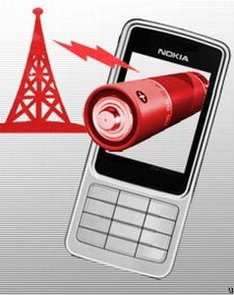
Today I just saw an interesting news, it says Nokia has taken another baby step in that direction with the invention of a cell phone that recharges itself using a unique system: It harvests ambient radio waves from the air, and turns that energy into usable power. Ultimately, this technology aims to convert electromagnetic waves into an electrical signal, somewhat similar to RFID (Radio-frequency identification).
Mind you, harvesting ambient electromagnetic energy is never going to enough electricity to power your whole house or office, but it just might be enough to keep a cell phone alive and kicking. Currently, the boffins at Nokia have already developed prototype devices that are able to harvest up to 5 milliwatts, although this amount isn't enough to juice up a handset just yet with Nokia's vision of producing 50 milliwatts being quite a ways off in the future. Nokia says it hopes to commercialize the technology in 3 to 5 years.
Google WAVE, "a new tool for communication and collaboration on the web, coming later this year." Google is going to launch another cool service - Google Wave.
Google Wave introduces a new platform built around hosted conversations called waves--this model enables people to communicate and work together in new and more effective ways. On top of that, with the Google Wave APIs, developers can take advantage of this collaborative system by building on the Google Wave platform. We want to expand upon that platform, which is why we've put together the initial draft of the Google Wave Federation Protocol, the underlying network protocol for sharing waves between wave providers.
It's include Real Time Instanting Messaging, Email, Real Time Editing Text and Picture by multiple users, API for Blogger, spell checker ( automatic link for web url, etc.,) playback for changes/updates, add the link by searching within wave client - Friend Linkie, you can make your own gadget with wave API, integrate map api into wave client, twisits in wave client, etc.,
Yes, that's between wave providers: anyone can build a wave server and interoperate, much like anyone can run their own SMTP server. The wave protocol is open to contributions by the broader community with the goal to continue to improve how we share information, together. You can find more details or whitepaper from http://www.waveprotocol.org/Home.